Drive through almost any Scottish town and you will see roofs carpeted in thick green moss. It can look soft and harmless, even a bit charming on an old cottage. So is moss bad for your roof, or is it just a cosmetic issue? The short answer is that a light dusting is rarely urgent, but heavy, established moss can cause real problems over time, and Scotland’s climate gives it every chance to spread.
Below, we look at why moss grows so well here, the specific ways it can affect your roof, and what a safe, lasting treatment looks like.
Why Moss Loves Scottish Roofs
Moss has no roots in the usual sense. It anchors itself with tiny thread-like structures and draws moisture straight from the air and the surface it sits on. That means it thrives anywhere that stays damp for long periods and gets little direct sun.
Scotland offers plenty of both. Frequent rain, mild damp winters and long spells of overcast weather keep roof surfaces wet for much of the year. North-facing slopes, roofs shaded by trees and properties in sheltered glens or close to the coast often stay damp for days after rain, which is ideal for moss.
Roof material plays a part too. Concrete tiles have a slightly rough, porous surface that moss grips easily. Natural slate is smoother but moss still settles in the overlaps and along the edges where water lingers. Older roofs with a weathered surface tend to collect moss faster than newer ones.
Is Moss Bad for Your Roof? The Real Risks
A thin film of moss will not bring a roof down overnight. The concern is what happens as it thickens over several seasons. Here are the main ways moss can cause damage.
It holds water against the roof
Moss acts like a sponge. A thick cushion can hold a lot of water and keep the tiles or slates beneath it wet long after the rest of the roof has dried. Constant moisture speeds up weathering of concrete tiles and can encourage other growth such as lichen and algae.
Frost damage in winter
When that trapped water freezes, it expands. Over a Scottish winter with many freeze and thaw cycles, this can contribute to surface spalling, cracking and the gradual breakdown of porous roof materials.
Lifting tiles and slates
Moss often grows thickest in the gaps where one tile overlaps another. As it builds up, it can lift the lower edge of the tile slightly. This allows wind-driven rain to get underneath, and it can make tiles more vulnerable in high winds.
Blocked gutters and downpipes
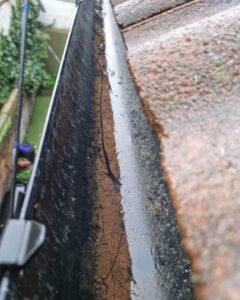
Dead moss dries out, breaks away and washes into the gutters. It is one of the most common causes of blocked gutters we see. Once the outlets clog, water overflows down the walls and can lead to damp inside the home.
How to Tell if Your Moss Problem Needs Attention
When homeowners ask us “is moss bad for your roof?”, our answer usually depends on how much of it there is. Not every roof with a bit of green needs immediate work. These signs suggest the moss has moved beyond cosmetic and is worth dealing with.
- Moss forming thick cushions rather than a thin film.
- Growth concentrated in the overlaps between tiles, with edges visibly lifted.
- Clumps of moss regularly appearing on paths, in the garden or in gutters.
- Gutters overflowing during rain despite having been cleaned recently.
- Damp patches on ceilings or in the loft, especially beneath shaded slopes.
If you notice any of these, a professional inspection from the ground or by drone can show how far the growth has spread and whether any tiles need attention.
Safe Ways to Remove Roof Moss
Getting the moss off is only part of the job. How it is removed matters just as much, because the wrong method can do more harm than the moss itself.
Why we advise against pressure washing
Blasting a roof with a high-pressure jet can strip the protective surface from concrete tiles, force water up under the overlaps and dislodge ridge and verge mortar. It may look clean afterwards, but it can shorten the life of the roof and leave it more porous, so moss returns quicker.
Hand removal and soft washing
Professional roof cleaning and moss removal usually combines careful manual scraping of heavy moss with a low-pressure soft wash. This lifts the growth without blasting the roof surface.
Biocide treatment
Once the bulk of the moss is off, a biocide treatment is applied. This kills remaining spores and roots that you cannot see, which helps slow regrowth considerably. Because the treatment keeps working for a period after application, it is one of the most effective steps in keeping a roof clear for longer.
A word on DIY
Roofs are dangerous places to work, especially when wet and covered in slippery moss. We strongly advise homeowners not to climb onto their roof or lean ladders against gutters to remove moss. Falls from height are a serious risk, and walking on tiles or slates can crack them. A specialist will have the right access equipment, insurance and training.
Moss Removal Across Scotland
Every roof is different, so the right approach depends on the material, the pitch and how established the growth is. We carry out roof cleaning in Glasgow, where sandstone villas and post-war semis alike often sit in the shade of mature trees. On the east coast, damp sea air keeps roofs wet for long spells, and our roof cleaning in Dundee service is set up for exactly that. We also provide roof cleaning in Stirling and across the wider Forth Valley.
So, is moss bad for your roof? Left unchecked over years, it can be. Dealing with it early, using gentle methods followed by a treatment, is usually the simplest way to protect your roof and avoid bigger repairs later.
Frequently Asked Questions
Can moss on a roof cause leaks?
Moss on its own does not usually create a hole, but heavy growth can lift tiles, hold water against the roof and block gutters. Each of these can let water reach places it should not, particularly during wind-driven rain. Over time, that can lead to leaks, damp in the loft or staining on internal ceilings.
Will roof moss come back after cleaning?
Moss spores are everywhere in Scotland, so some regrowth over time is natural. Applying a biocide treatment after cleaning slows this down considerably by killing remaining spores. Keeping overhanging branches trimmed and gutters clear also helps, and some homeowners choose regular maintenance visits to keep growth under control before it builds up again.
Is it safe to remove moss from my roof myself?
We would not recommend it. Mossy roofs are slippery, ladders can move on wet ground, and walking on tiles or slates can easily crack them. Pressure washers can also damage the roof surface. A professional team with proper access equipment and insurance can remove moss safely without putting you or your roof at risk.
If moss is building up on your roof, Roof De Moss Scotland can take a look and talk you through the options. We are fully insured and happy to provide a free, no-obligation quote. Call us on 07843 147655 or send us a message through our contact page.