A conservatory should be the brightest room in the house. But after a couple of damp Scottish winters, many roofs turn green around the edges, collect a grey film across the panels and fill their gutters with moss and leaves. Light levels drop, the room feels gloomy and the roof starts to look much older than it is. The good news is that most conservatory roofs come back to life with the right cleaning. The bad news is that the most obvious way to do it, climbing up with a brush and a bucket, is also the most dangerous.
Here’s why conservatory roofs go green so quickly, how to clean one safely, and when it makes sense to call in a professional.
Why Conservatory Roofs Go Green So Fast in Scotland
Green growth on a conservatory roof is usually algae, sometimes with moss or lichen where dirt has gathered in the joints and glazing bars. It thrives on three things Central Scotland has plenty of: moisture, shade and organic debris.
- Damp weather. Long wet spells and slow-drying autumn and winter days keep the roof damp for weeks at a time.
- Shade from trees and walls. North-facing conservatories, or those under trees, rarely dry out fully, so algae spreads fastest there.
- Debris from the main roof. Moss and grit washing off a mossy house roof land on the conservatory below and give algae something to root into.
- The shape of the roof. Glazing bars, ridge caps and the edges of polycarbonate sheets trap dirt where water can’t wash it away.
Polycarbonate roofs tend to suffer most, because their ribbed channels hold water and dirt, but glass roofs go green too, especially along the glazing bars and the gutter line.
Never Stand or Kneel on a Conservatory Roof
This is the most important point in the whole article. Conservatory roofs, whether glass or polycarbonate, are not designed to take a person’s weight. Glazing bars can flex, panels can crack or slip, and a fall through a roof is a serious risk. Leaning a ladder against the frame or gutter can also damage seals and guttering.
If a roof can’t be reached safely from the ground or from proper access equipment, it isn’t a DIY job.
How to Clean a Small Conservatory Roof Safely
For a small, low conservatory where you can reach the whole roof from the ground with an extension pole, a gentle clean is possible:
- Clear loose debris first. Use a soft brush on an extendable pole to sweep off leaves and moss from the ground.
- Use a soft brush and mild solution. Warm water with a small amount of washing-up liquid is enough for light dirt. Avoid harsh chemicals, solvents and bleach, which can cloud polycarbonate and damage seals.
- Work with the grain. On polycarbonate, brush along the channels, not across them, so dirt is pushed towards the gutter.
- Rinse gently. A hose on a gentle setting is fine. Avoid pressure washers, which can force water past seals, damage polycarbonate and strip the edges of glazing bars.
- Clear the gutter last. Whatever you wash off ends up in the gutter, so check it is flowing before you finish.
Why Pressure Washing Is a Bad Idea
It is tempting to blast a green roof clean, but high pressure does more harm than good on a conservatory. It can crack or craze polycarbonate, push water into the frame and the room below, damage rubber seals and gaskets and strip the coating from glazing bars. It also tends to leave algae spores behind, so the green comes back quickly.
Professional cleaning uses a low-pressure approach instead. Our soft washing service uses low pressure and suitable cleaning solutions to lift dirt, algae and staining without damaging the surface, which is exactly what delicate roofing materials need. You can read more about the difference in our guide to soft washing vs pressure washing.
When to Call a Professional
- The conservatory is too high or too large to reach from the ground.
- Moss and algae have built up in the glazing bars and joints over several years.
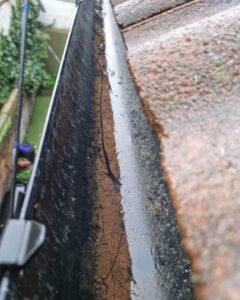
- The gutters are blocked or overflowing onto the frame.
- The main roof above is mossy and keeps shedding debris onto the conservatory.
- You want the roof, fascias and gutters done together in one visit.
Because conservatory roofs so often go green because of what’s happening above them, it’s worth looking at the whole property. Clearing moss from the main roof with our roof cleaning service and keeping gutters flowing with gutter clearing means less debris landing on the conservatory and a longer-lasting result.
How to Keep a Conservatory Roof Clean for Longer
- Trim back overhanging branches where you can.
- Brush off leaves and debris from the ground every few weeks in autumn.
- Keep the conservatory gutters and the main roof gutters clear.
- Deal with moss on the main roof before it starts washing down.
- Book a gentle professional clean before the green takes hold rather than after.
Conservatory Roof Cleaning Across Central Scotland
Roof De Moss cleans conservatory roofs, roofs, gutters and fascias across Stirlingshire and Central Scotland, including Stirling, Falkirk, Livingston and the other areas we cover. For a free, no-obligation quote, call 07843 147655 or get in touch online.
Conservatory Roof Cleaning FAQs
Can I walk on my conservatory roof to clean it?
No. Conservatory roofs are not built to take a person’s weight. Standing or kneeling on one risks cracking panels and a serious fall. Clean from the ground with a pole, or call a professional.
Can I pressure wash a conservatory roof?
It’s best avoided. High pressure can damage polycarbonate, seals and glazing bars and push water into the room. A low-pressure soft wash is the safer way to remove algae.
Why does my conservatory roof keep going green?
Damp weather, shade and debris washing down from the main roof all feed algae. Tackling moss on the house roof and keeping gutters clear helps the conservatory stay cleaner for longer.
How often should a conservatory roof be cleaned?
Many homes in Central Scotland benefit from a clean once a year, ideally before winter. Shaded conservatories or those under trees may need attention more often.