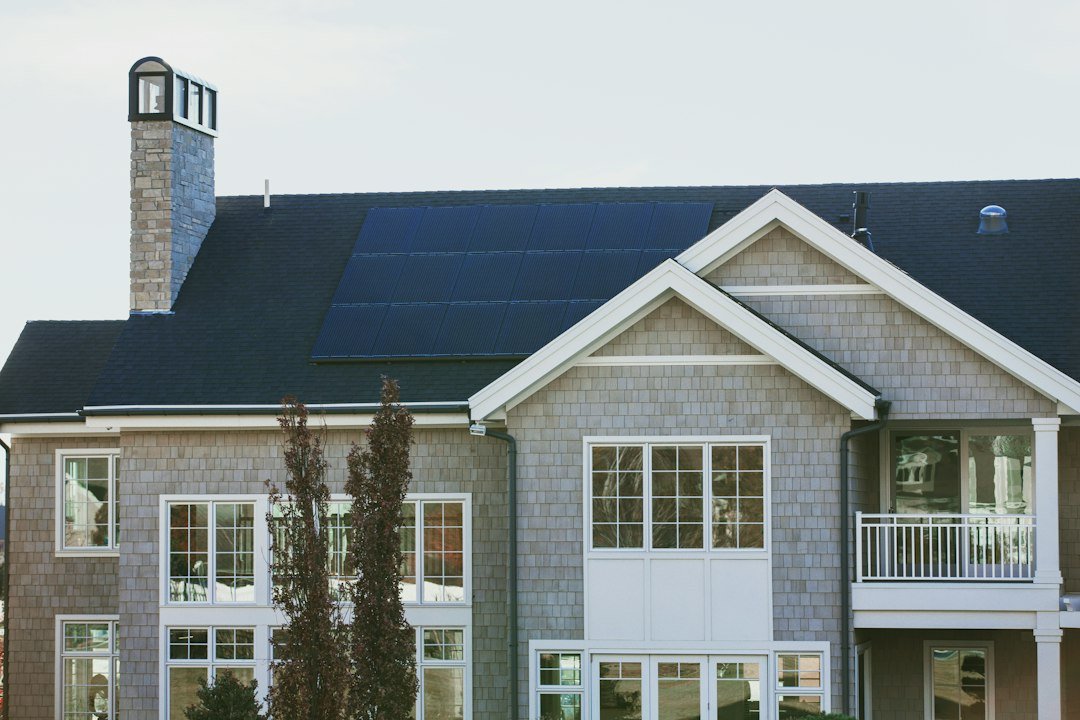
One of the most common questions we hear from homeowners with a rooftop array is simple: do solar panels need cleaning in Scotland, or does all that rain take care of it? It is a fair question. We certainly get plenty of rain, and it does rinse off some loose dust. But rain is not a cleaning system, and there are several types of grime it leaves behind.
In this article, we explain what actually builds up on panels in a Scottish setting, how that affects the light reaching the cells, and how to decide whether your system would benefit from a professional clean.
Does Rain Keep Solar Panels Clean?
Rain helps, but only up to a point. When people ask us “do solar panels need cleaning if it rains this much?”, the honest reply is that it depends on what kind of dirt is on them. On a well-pitched roof, a shower will wash away fine, loose dust. What it struggles with is anything sticky, greasy or growing.
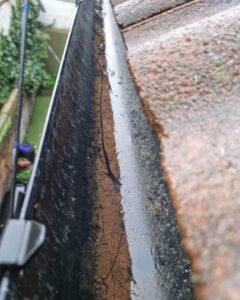
Rainwater itself is not perfectly clean either. As droplets dry, they can leave a thin film of residue, and on lower-pitched panels water tends to collect along the bottom edge of the frame. Over time, a line of dirt builds up there, and moss or algae may start to grow in it.
So while Scottish weather does give panels a regular rinse, it does not remove everything. That is the gap where cleaning comes in.
What Builds Up on Solar Panels in Scotland
Every property is different, but these are the culprits we see most often on Scottish rooftops.
- Bird droppings: seagulls in coastal towns and pigeons in cities leave deposits that rain rarely shifts. Even a small patch can shade part of a panel.
- Moss and algae: in damp, shaded spots, green growth can creep in from the frame edges, especially where dirt has collected.
- Lichen: slow-growing and very tightly attached, it is common in cleaner rural air.
- Traffic film and soot: homes near busy roads or in town centres can pick up a greasy grey film.
- Agricultural dust and pollen: rural properties near fields may see a layer of fine dust, particularly in spring and late summer.
- Leaves and tree debris: panels near trees can collect leaves that sit in the gaps and at the lower edge.
So, Do Solar Panels Need Cleaning?
For many homes, the answer is yes, at least occasionally. Solar panels work by letting light reach the photovoltaic cells. Anything that sits on the glass blocks some of that light, and when part of a panel is shaded, it can affect the output of the whole string, depending on how your system is wired.
How much difference a clean makes depends on how dirty the panels are, the angle they sit at and where you live. A panel with a light dusting may see very little change. A panel with bird droppings across several cells or a line of moss along the bottom edge may be losing noticeably more. Rather than relying on general figures, the best guide is your own system’s data.
Check your generation figures
Most inverters and monitoring apps show daily or monthly output. Compare similar months year on year. If generation has dropped more than you would expect for the weather, and there are no faults showing, dirt on the panels is one of the first things worth checking.
Look from the ground
From a safe spot in the garden or an upstairs window, you may be able to see obvious soiling, white streaks from droppings or a green tinge along the frame. Binoculars can help. A professional can also inspect panels using cameras on extendable poles.
Check your warranty
Some manufacturers and installers mention cleaning or maintenance in their warranty terms. It is worth reading your paperwork so you know what is expected and what cleaning methods are approved.
How Solar Panels Should Be Cleaned
Cleaning panels is not the same as washing a window. The glass has a special surface, and the panels sit in an electrical system, so the method matters.
- Purified water: professionals typically use deionised or purified water, which dries without leaving mineral spots.
- Soft brushes: water-fed poles with soft bristles lift dirt without scratching the glass or its coating.
- No harsh chemicals: detergents and abrasive products can leave residue or damage anti-reflective coatings.
- No pressure washers: high-pressure water can force moisture into seals and frames.
We would strongly advise against climbing onto the roof or leaning a ladder against panels to clean them yourself. Roofs are dangerous, panels are slippery when wet and can be damaged by weight, and there are live electrical components involved. Water-fed pole systems allow panels to be cleaned safely, and a professional will carry the right insurance for working at height.
Solar Panel Cleaning Near You
Different parts of Scotland bring different challenges. In the capital, soot and traffic film are common, and our solar panel cleaning in Edinburgh is designed to lift that greasy layer gently. Homes around the Tay often contend with tree debris and pollen, which our solar panel cleaning service in Perth deals with regularly. Up in the north east, seagulls and salty air can quickly coat panels, so solar panel cleaning in Aberdeen is often needed more frequently than inland.
Ultimately, do solar panels need cleaning? Not constantly, but an occasional professional clean, guided by what you can see and what your monitoring tells you, helps your system make the most of the light it gets.
Frequently Asked Questions
How often should solar panels be cleaned in Scotland?
There is no fixed rule. Many homeowners find once a year is enough, while properties near the coast, busy roads, farmland or lots of trees may benefit from more frequent cleans. The best approach is to watch your generation figures and look for visible soiling, then book a clean when output dips or dirt is obvious.
Can I clean my solar panels with a hose?
A gentle rinse from the ground with a hose may shift loose dust, but tap water can leave mineral spots as it dries, and it will not remove droppings, moss or lichen. Never climb onto the roof or use a pressure washer. For a thorough, safe clean, purified water and soft brushes on water-fed poles work best.
Will cleaning my solar panels damage them?
Not when it is done properly. Damage usually comes from abrasive brushes, harsh chemicals, pressure washers or people walking on panels. Professional cleaning uses soft brushes and purified water to protect the glass and its coatings. It is also worth checking your manufacturer’s guidance so the cleaning method suits your particular panels.
If your panels look grubby or your generation has dipped, Roof De Moss Scotland can help. We are fully insured and offer free, no-obligation quotes. Call 07843 147655 or contact our team online to arrange a visit.